Enhancing Patient Care with Cutting-edge Optical Fiber Solutions
The Phillips Medisize sites specializing in optical fiber products are partnering to enhance our technical capabilities, driving meaningful advancements that may help support improved healthcare outcomes.
Our teams in Phoenix, Arizona, and Caldwell, Idaho, produce complex optical fiber products that contribute to a wide range of medical applications. “Optical fiber products are to the field of photonics as microchips are to electronics,” said Scott Coe, Phoenix site leader. “They are essential to products that use light to send information, make images or detect changes in the environment.”
For medical applications in particular, the ability to transmit light signals with precision, flexibility and minimal invasiveness make optical fiber products valuable tools. They act as tiny, flexible light guides and sensors inside the body, designed to support doctors in diagnosing, monitoring and treating medical conditions. When used appropriately, they may help enhance safety and effectiveness when compared to some traditional methods.
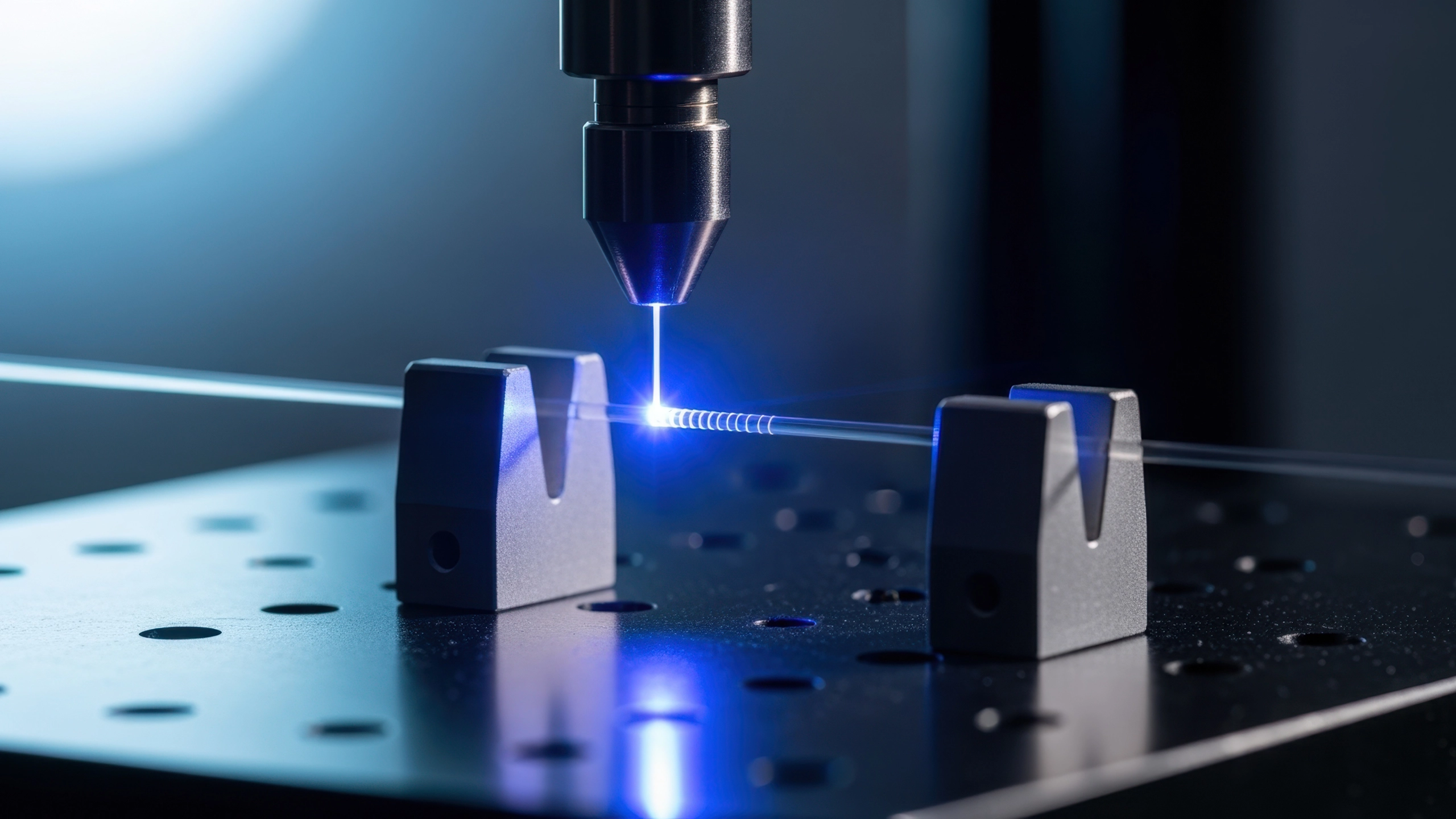
Phillips Medisize is investing in further specialization and expertise in a joint Caldwell-Phoenix program designing and manufacturing fiber Bragg gratings (FBGs). An FBG is a short segment of optical fiber that undergoes a specialized process to make it reflect specific wavelengths of light while transmitting others. The reflected wavelength (called the “Bragg wavelength”) changes in response to external factors such as temperature or strain, making FBGs ideal for sensing applications.
An FBG writing system* is being acquired that will be used to support the development of sensors for medical use. Fiber production and FBG writing happens in Phoenix, a site recognized for its longstanding expertise in the field of specialty optical fiber products, solutions and assemblies for industrial and medical applications for more than 40 years. The sensor assembly will be done in Caldwell, which has considerable experience in making FBG assemblies used in many applications:
Biomechanics and Orthopedics
FBGs are designed to monitor strain in tendons and ligaments or map plantar pressure, potentially providing real-time data that may support rehabilitation efforts and contribute to understanding injury mechanisms.
Shape Sensing
A fiber bundle with multiple fibers and gratings is designed to sense the bending of the fiber in 3D, which may be used in a catheter to help determine its position within the human body. This type of sensor has the potential to reduce reliance on the need for fluoroscopes to determine the position of the catheter, supporting efforts to enhance procedural safety for the patient, doctors and nurses, and aiming to provide accurate information.
Cardiology and Gynecology
FBG sensors are designed to measure strain, pressure and temperature in high-magnetic environments, which may support noninvasive diagnostics during MRI scans or other procedures.
Wearable and Immersive Technologies
Flexible polymer optical fiber (POF) FBGs can be integrated into wearable devices for continuous patient monitoring or even into 3D-printed structures for a new generation of smart healthcare devices.
Biosensing
FBG sensors are designed to sense changes in their surrounding refractive index, which may enable the detection of specific biomarkers and proteins in body fluids, a potentially promising technique that may help early disease diagnosis.
Thermal Monitoring
FBG sensors are designed to offer measurement capabilities with immunity to electromagnetic interference, potentially allowing them to provide thermal mapping in critical areas, even during MRI procedures.
Structural Health Monitoring
FBG sensors are designed to detect strain, temperature and pressure in bridges, buildings and aircraft.
Telecommunications
FBG sensors are designed to act as filters or reflectors in fiber-optic networks.
Laser Systems
FBG sensors are designed to serve as wavelength-selective mirrors in fiber lasers.
By leveraging decades of specialized expertise, the Phoenix and Caldwell teams are strengthening our company’s capabilities in optical fiber technology for healthcare applications. Their collaboration on developing fiber Bragg grating sensors enhances our ability to support precise diagnostics and helps to contribute to improved patient experience. Together, these sites demonstrate our ongoing commitment to expanding our technical expertise and delivering reliable solutions that aim to help healthcare professionals in their work of patient care.
*Disclaimer: These sensors and related technologies are under development and have not received regulatory clearance from the U.S. Food and Drug Administration (FDA) or comparable health authorities. As such, their safety and effectiveness have not been established, and these products are not intended to diagnose, treat, cure, or prevent any disease at this time.