
Managing Complexity through Simplicity in Dry Powder Inhaler Device Platforms
Simplicity in a dry powder inhaler (DPI) shows up most visibly in the hands of the patient. A device must be safe, effective and intuitive. At the same time, simplicity has implications beyond use, influencing reliability and manufacturing, and how the drug-device combination is managed as requirements evolve.
For our DPI platforms, leading up to and including the latest evolution of the Open-Inhale-Close (OIC) device, simplicity has been a guiding principle from the product conception.
This is reflected in a three-step user interaction: open, inhale, close. This core principle of simplicity in the hands of patients guides many of our device design choices. Through this lens, each design decision is evaluated for its impact on reliability, manufacturability and life cycle management, while maintaining the focus on safe and effective drug delivery.
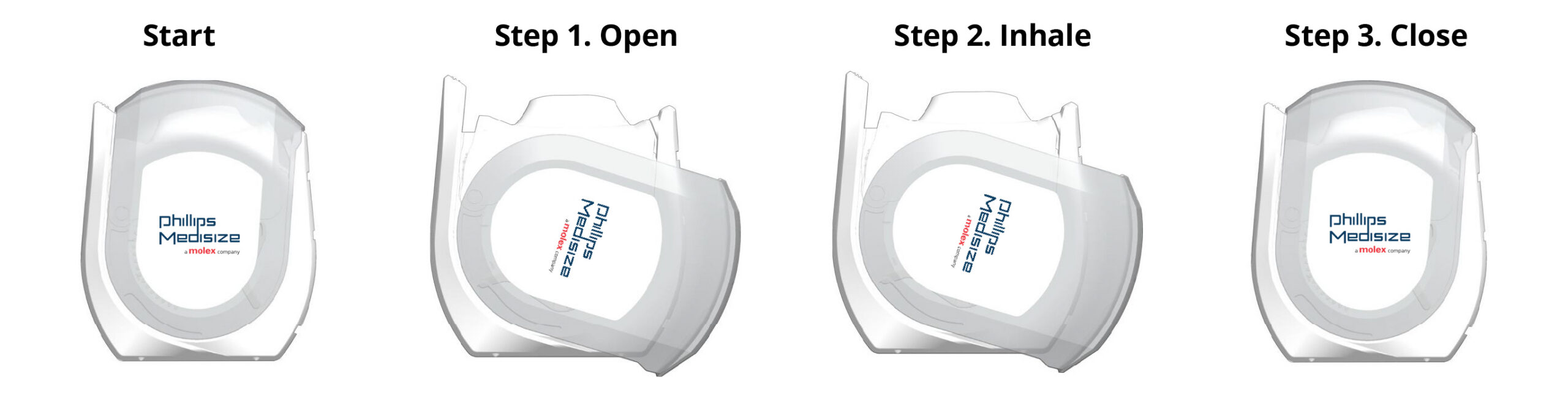
This approach has been carried forward and refined across the generations of Phillips Medisize DPI platforms used in marketed products, including AirFluSal™ GyroHaler™ and Hikma Gx Advair™i. These benefits are summarized in Figure 1.
Figure 1. Summary of key OIC platform features and the value they enable
OIC DPI Device Key Features and Benefits:
- Easy, user-operation design with three steps: OPEN, INHALE, CLOSE
- Low-complexity, 10-component device design and single blister strip
- Pre-metered multidose blister strip featuring integral dose counter
- Thirty doses, with each dose coming from two distinct individually sealed blister pockets giving optionality for mono, duo or triple active pharmaceutical ingredient (API) combination products
- Versatility; able to be used with a range of formulations, giving consistent dose uniformity, delivering formulations beyond traditional respiratory indications
- Substitutable device for generic DPIs, including as AB-rated substitutable drug-device combination for generic Ellipta® products
- Protected by 10 patent families
- Fully integrated formulation and cGMP manufacturing support for clinical and commercial supply
- As the design authority for the OIC DPI device, Phillips Medisize has a successful track record in supporting the clients/development partners with their Drug Device Combination Product (DDCP) applications including, Investigational New Drug (IND) applications, Abbreviated New Drug Applications (ANDAs) and Clinical Trial Authorisations (CTAs) with either generic or proprietary formulations
Simplicity in Component Count, Interfaces and Reuse
One clear way this strategy can be demonstrated in OIC is through limiting the number of components and component interfaces. OIC has 10 molded components plus a single pre-filled blister strip, which can compare favorably in terms of component count against devices in the same category.
Fewer components generally result in fewer parts interacting with each other. That can reduce the number of critical-to-function dimensions with tolerances that must be controlled and the number of dependencies that can cause variation over time. From a manufacturing point of view, this can also mean fewer tools to make, validate, maintain and replace, and simpler assembly processes, with the potential to reduce footprint and manufacturing costs.
This can also affect work beyond the physical design. As the number of components and features increases, the amount of documentation, risk analysis, and review work increases as well, because there are more interactions and dependencies that must be understood and justified. Keeping complexity under control can help keep these activities within a more manageable scope.
The same philosophy applies to reusing core functional elements across different generations of the device where possible. Core elements such as the blister strip format, indexing mechanism, piercing technology and airway aerodynamic features have been used across different Phillips Medisize DPI platforms because they have shown reliable performance and consistent manufacturability in production. When changes are needed to evolve from one generation to the next, they are made to adapt these proven elements rather than replacing them outright.
Illustrative Example: The Blister Strip and Dose Information
The blister strip is a good example of how this way of working is applied in practice. As pharmaceutical companies strive to improve the treatment of respiratory disease, new medicines have been introduced (for example, the introduction of triple API formulations). By adjusting how the strip interacts with other parts of the device, rather than by adding extra subsystems and complexity, the design aims to allow the delivery of more complex medicines to be introduced without materially increasing the number of components, preserving a simple overall architecture even as requirements have expanded.
This includes the indexing mechanism, how used and unused blisters are handled, and how rewind mechanisms work. Together, these interactions can also enable internal space within the device to be managed in a way that can support different blister strip lengths and dose configurations, while remaining in the same overall device footprint.
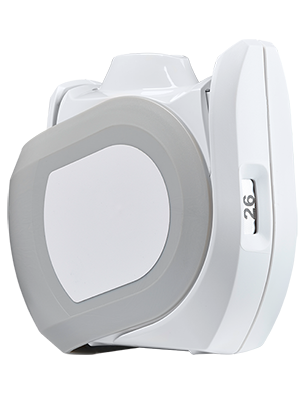
The same thinking applies to dose counting and what works most optimally for the patient. Since the blister strip moves with the dose, we can print the number of remaining doses directly on the strip and make that information visible as part of the device design. This avoids the need for a separate mechanical dose counter mechanism (with additional components, interfaces, tolerances and risks) whose only function would be to track the same information elsewhere.
The same principle applies in other areas of the device, such as the management of airflow resistance. By deliberately designing airflow behavior to be controlled by a small number of components with controlled dimensions, it becomes possible to achieve consistent performance at all scales of multi-cavitation tooling while still allowing flexibility to adapt to different formulations or applications with clearer predictable changes.
Implications Over Time
Over the life of a product, the benefits of reduced component count, fewer interfaces and greater reuse of proven technologies may accumulate and become increasingly material.
Validation work increases with the number of tools involved, so devices that rely on fewer tools generally tend to require less repeated validation. Life cycle management can also be more straightforward when there are fewer components and interactions to understand and control.
This can support a smoother transition from early development builds through to commercial manufacturing (and required technology transfers to different manufacturing facilities to support customer needs), allowing teams to rely on established knowledge and predictable behavior as production capacity requirements evolve.
Simplicity and Evolution to Support Customer Requirements
Importantly, this approach to simplicity does not stop devices from evolving in order to address changing market and customer needs.
Across different platforms, new features and capabilities have been added while keeping core technologies that are already well understood. Engineering effort is focused on what needs to change for the next generation, rather than reworking the entire device each time, whether that means performance improvements, optional features or different dose configurations.
In practice, this approach centers on creating a device that is straightforward for patients to use, while maintaining the underlying robustness needed for development and manufacture.
The OIC platform reflects this balance. By managing complexity through simplicity, it can support consistent performance and scalable manufacturing, and the flexibility to accommodate a broader range of formulations and potential indications. As a platform device, it is ready for adaptions according to specific customer and technical requirements. For example, achieving a higher level of fine particle fraction (FPF) and fine particle dose (FPD), proprietary cyclone deaggregation technology can be applied in order to meet additional requirements.
As inhaled therapies continue to evolve, this kind of device platform approach can help enable faster, lower-risk and more flexible development pathways readily accessible to our customers while always keeping the patient experience and useability at the core.
i All trademarks and registrations are the property of their respective owners.